

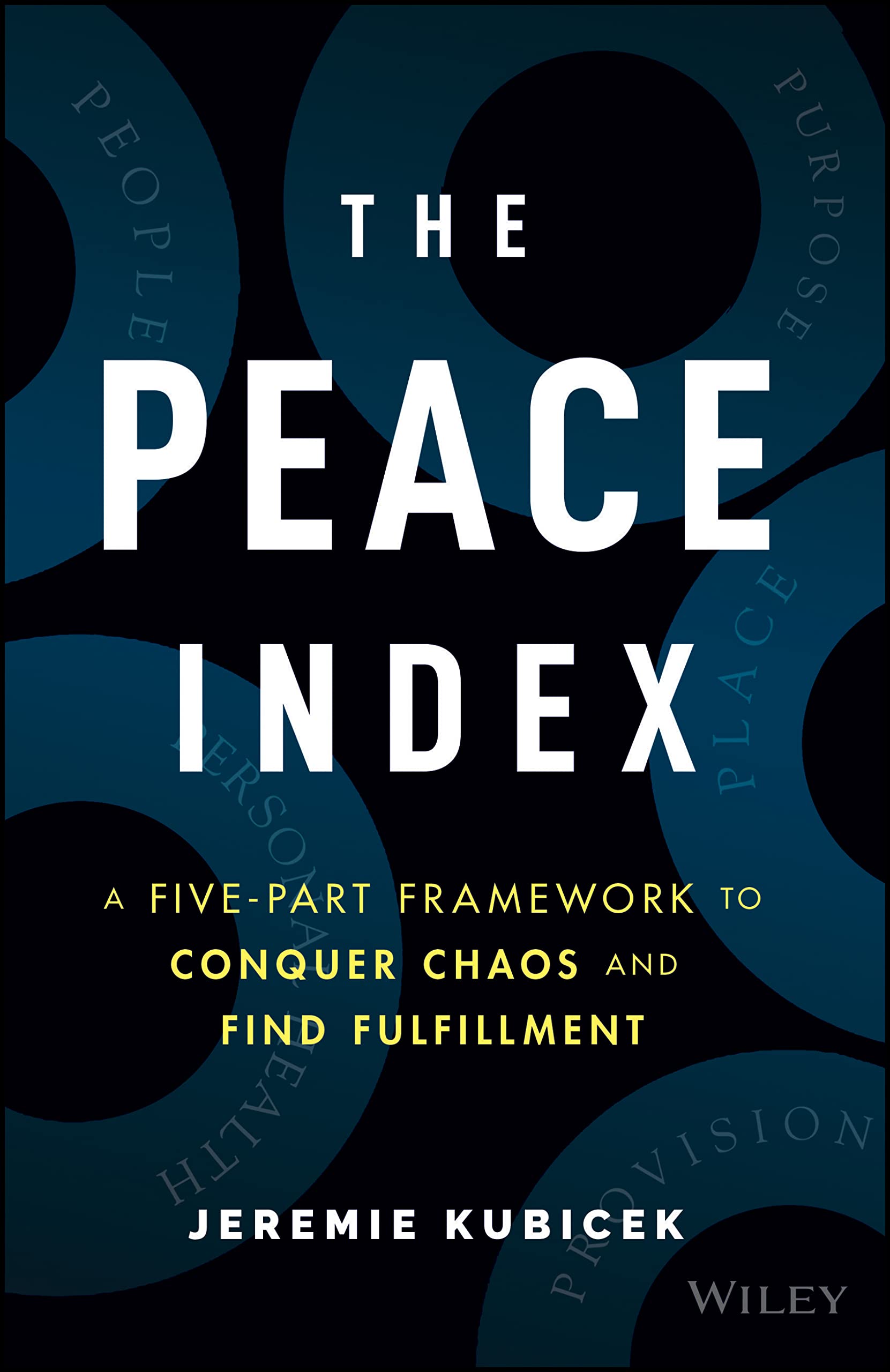
What if you could take a quick snapshot of your internal world—your stress, satisfaction, and stability—and use it as a guide, much like The Peace Index, to improve both your personal and professional life?
That’s the idea behind the Peace Index from GiANT Worldwide. It’s a simple yet powerful tool designed to help you assess your current state of peace—how centered, content, and in control you feel across five key areas of life. And here’s the best part: you can take the Peace Index assessment for free, right now.
So what exactly is the Peace Index, and why does it matter?
What Is the Peace Index?
The Peace Index measures your current sense of well-being based on five categories:
- People – The quality of your relationships. Are you at peace with the people in your life—family, friends, coworkers, and yourself?
- Place – Your environment. Does your current living or working space support or stifle your peace?
- Purpose – Your sense of direction. Are you living in alignment with your values and passions, or are you drifting?
- Personal Health – Physical, emotional, and mental well-being. Are you prioritizing self-care?
- Provision – Your financial and material stability. Do you feel secure and supported?
You rate each area on a scale of 1 to 100, and the average becomes your Peace Index score. The lower the number, the more tension or imbalance is present. The higher the number, the more internal peace you’re experiencing.
Why The Peace Index Matters
Peace isn’t just a feel-good concept. It’s foundational. When we lack peace—when we’re stressed, disconnected, or overwhelmed—it shows up in our relationships, our decision-making, and our ability to lead or contribute meaningfully. A low Peace Index can quietly undermine your confidence, effectiveness, and even your health.
Here’s what makes the Peace Index so impactful:
- Clarity: Most of us sense when something is “off,” but we don’t always know what or why. The Peace Index helps you pinpoint where the unrest is coming from.
- Self-awareness: You get a personalized score and a breakdown of what’s helping or hurting your peace right now.
- Actionable insights: Once you identify the lowest area, you can start taking small, targeted steps to improve it—whether it’s having a hard conversation, changing a routine, or seeking support.
- Leadership benefits: If you lead others, your internal peace (or lack thereof) directly influences your team. Leaders with high Peace Index scores tend to create more stable, productive, and trust-based environments.
Real Talk: Life Happens
The Peace Index isn’t a one-time fix. It’s meant to be a check-in—a way to regularly gauge your peace and respond before stress spirals out of control. Life throws curveballs. People disappoint us. Plans go sideways. But the goal isn’t to have a perfect score. It’s to know where you stand and do something about it.
Even better? The Peace Index can become a shared language with your team, spouse, or friends. Imagine being able to say, “I’m at a 62 right now,” and have others understand that you’re under strain without judgment. That’s the kind of connection and empathy that builds strong cultures.
Take the First Step
Whether you’re feeling burned out or just curious, the Peace Index is worth the minimal investment of your time. It’s free, private, and surprisingly revealing.
Take the Peace Index Assessment
If you’re a leader, coach, or HR professional, consider using it with your team. You might be surprised at what opens up when people feel seen—and when they start finding their way back to peace.
Don’t need to wait for the chaos to stop. Start building peace, one insight at a time.
You may reprint this post in your own print or electronic newsletter, but please include the following: “Reprinted with permission from the Lead Empowered Blog: For a free subscription, go to http://www.LeadEmpowered.com. Copyright 2025 Nathan R Mitchell – Lead Empowered.”



Share Your Field Notes: Add to the Journey!