

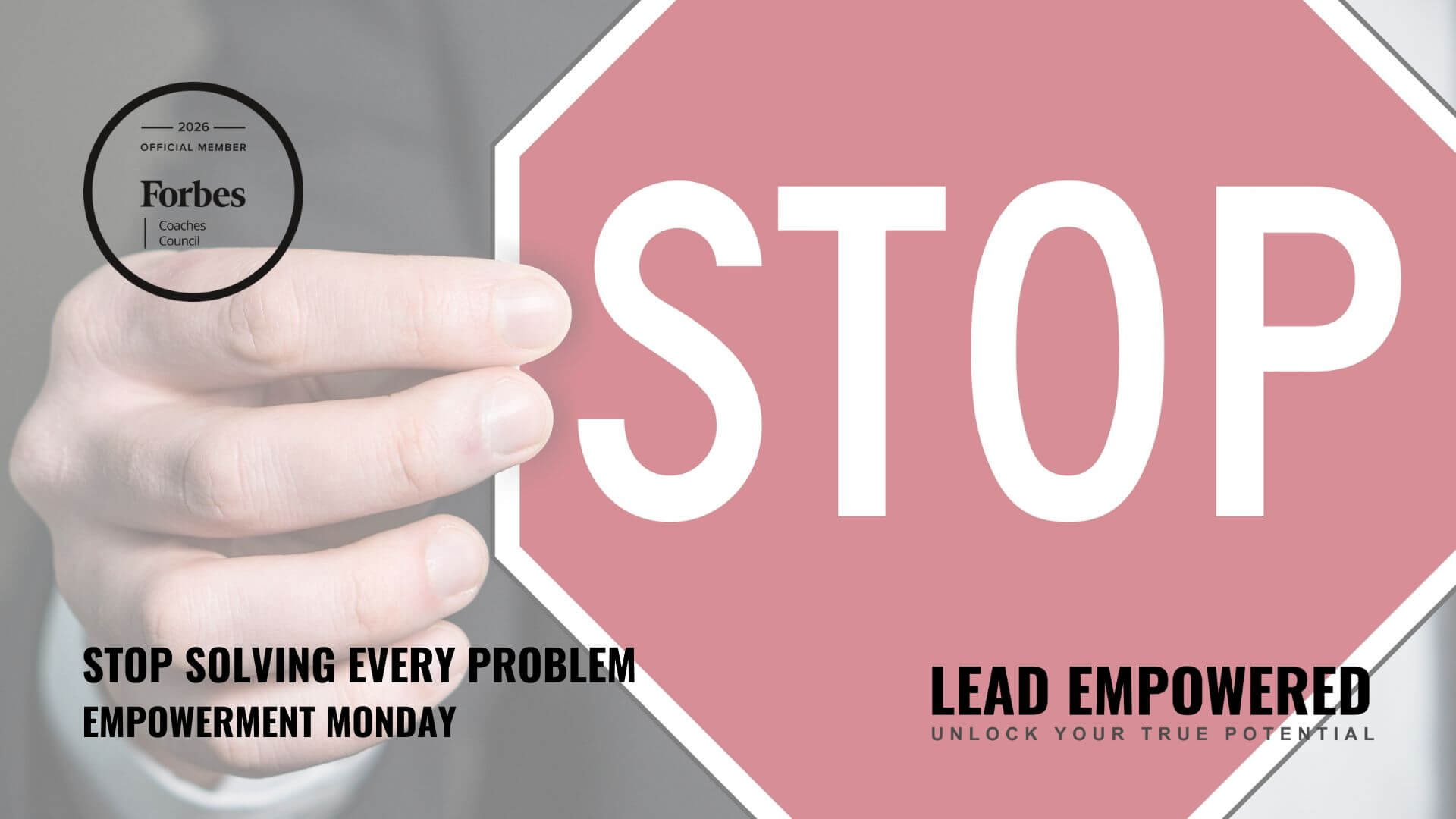
The best leaders don’t have all the answers, but they ask the questions that help others discover them. Effective leaders are also able to recognise and address leadership problems within their teams.
Have you ever caught yourself answering a question before someone had fully finished asking it? Or maybe your team comes to you with every challenge because they know you’ll solve it.
At first, it feels like good leadership. You’re helping. You’re removing obstacles. You’re keeping work moving. But over time, something unexpected happens. Your team becomes more dependent on you than developed by you.
One of the biggest shifts every leader must make is moving from being the chief problem solver to becoming the chief people developer.
There’s an old saying: “Give a person a fish and you feed them for a day. Teach them to fish and you feed them for a lifetime.”
Leadership works the same way. Every time we immediately provide the answer, we unintentionally teach people to come back to us for the next one. Every time we ask thoughtful questions, we teach people how to think. Which would you prefer?
The Cost of Always Having the Answer
When leaders solve every problem:
- Decision-making slows because everything funnels through one person.
- Employees become hesitant to take initiative.
- Innovation decreases because people wait for approval instead of offering ideas.
- Leaders become overwhelmed, believing they’re the only one capable of fixing things.
Ironically, many leaders complain about being overwhelmed while unknowingly creating the very dependency that keeps them overwhelmed.
Replace Answers with Questions
The next time someone walks into your office with a problem, resist the urge to jump in. Instead, ask questions like:
- “What options have you already considered?”
- “If I weren’t available, what would you do?”
- “What do you believe is the best solution?”
- “What risks should we think through?”
- “How can I support you rather than solve it for you?”
At first, these conversations may feel slower, but they’re an investment. You’re building confidence, judgment, and ownership.
Coaching Creates Capacity
Great leaders understand that every conversation has two goals:
- Solve today’s problem.
- Develop tomorrow’s leader.
The first goal creates short-term wins. The second creates long-term organizational health. When people feel trusted to think, decide, and contribute, they don’t just become more capable – they become more engaged. And engaged people create healthier cultures!
Your Empowerment Challenge This Week
Choose one conversation where your instinct would normally be to provide the answer. Instead, ask three thoughtful questions before offering any advice. You may discover your team already has the solution – they’ve simply been waiting for permission to trust themselves.
Because leadership isn’t measured by how many problems you solve. It’s measured by how many problem-solvers you develop.
PS: If you’re ready to start leading to your full potential and empower others to do the same, I’m offering a free 30-minute coaching session . No pitches. No hype. Just real conversation and practical next steps to help you grow this year. Grab your spot here and let’s talk.
Thank you to our Small Business Growth Partners and Trusted Affiliates!!!
This page may contain affiliate links. I may earn a commission if you purchase through these links, at no extra cost to you. Leadership consistency remains my personal commitment, regardless of affiliate partnerships.




Share Your Field Notes: Add to the Journey!