

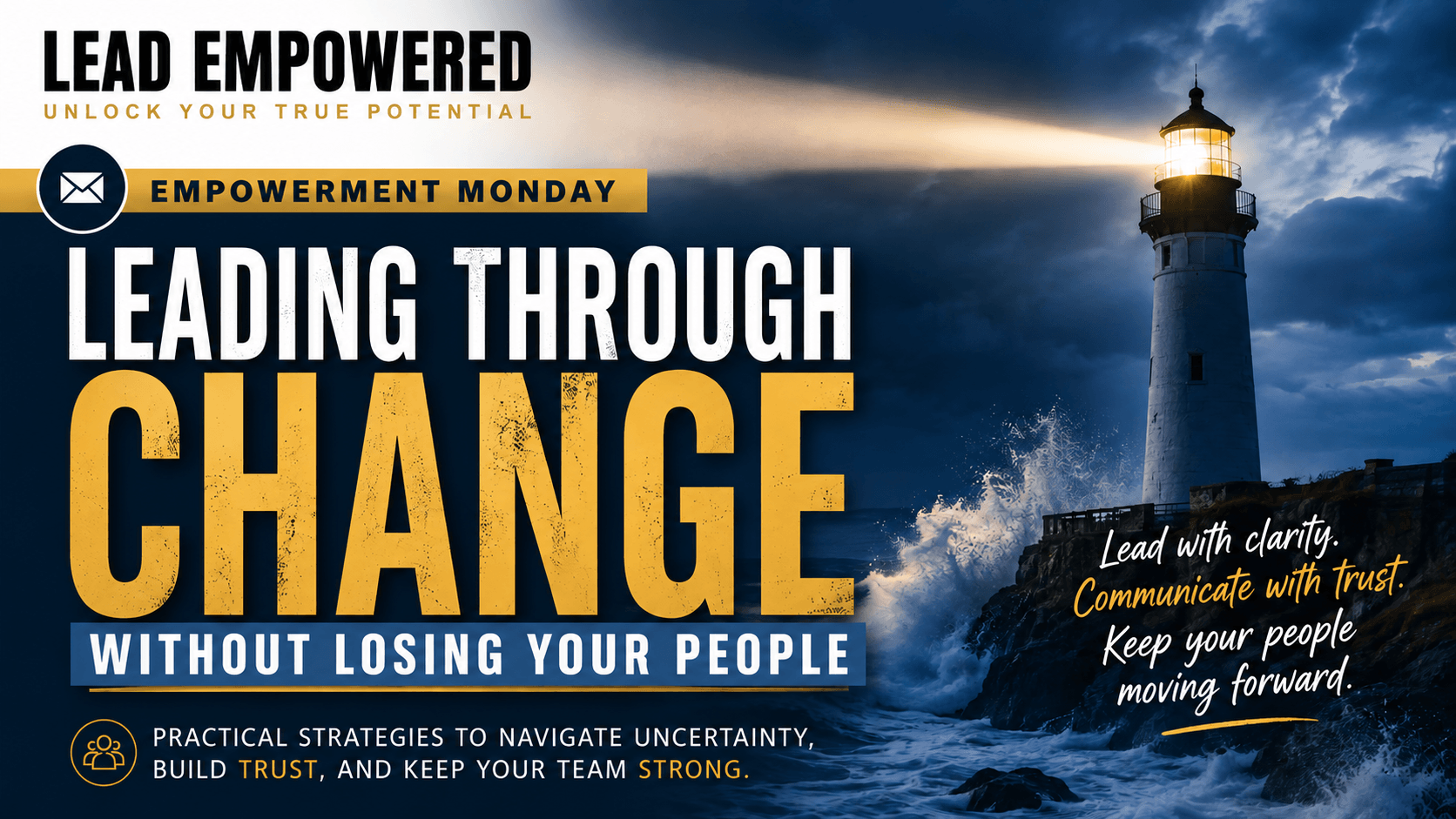
Change is easy to announce. Leading people through it is much harder. For SMB leaders, change is personal. There’s no large buffer between strategy and execution – so when something shifts, everyone feels it immediately.
Whether it’s a new strategy, a key employee leaving, a restructure, the adoption of new technology, the loss of a large client, or a shift in the market, your people are suddenly asking:
What does this mean for me? Is my job safe? What’s expected now? Can I trust leadership? Where are we going?
And sometimes… you don’t have all the answers yet. That’s where real leadership gets tested.
Your People Don’t Need Perfect Answers
One of the biggest mistakes leaders make in uncertainty is trying to sound certain. So they say, “Everything will be fine.” But people can feel when that’s not fully true.
What your team actually needs is honesty: what you know, what you don’t, and what you’re doing next. Your people can handle uncertainty. What they can’t handle is silence. Because silence gets filled with speculation, rumors, and worst-case assumptions, and fast.
Change Has a Hidden Cost
Every change creates workload. But there’s also a hidden cost: the leadership tax. Managers get flooded with questions. Employees lose focus. Productivity dips. High performers start looking around. Leaders get pulled into constant reassurance mode.
Eventually, the organization becomes so focused on managing the change that it stops moving forward. That’s why leaders must manage two things at once: The change—and the human response to it.
Don’t Just Communicate the “What”
Most leadership communication over-focuses on what is changing. But people need more than updates. They need context:
- Why is this happening?
- What stays the same?
- How will this affect me?
- What should I expect next?
And most importantly: Where do I fit in the future? Without that, you get compliance. With it, you can build commitment.
Your Managers Are Carrying the Weight Too
Frontline managers are often the most overlooked group during change. They’re expected to absorb uncertainty and explain it clearly to their teams – without always being given the full picture. That’s not sustainable. If you want them to lead well, don’t just hand them the announcement. Equip them:
- Give them context, not just messaging
- Clarify what they can and can’t say
- Prepare them for hard questions
- Allow them to say “I don’t know yet” without losing credibility
Because confused managers create confused teams.
Don’t Lose Your Culture in the Process
Change is sometimes necessary for growth. But there’s a difference between evolving your business and abandoning what made it strong in the first place. Your values matter most when things are hardest:
- Transparency when the news is difficult
- Respect when decisions are unpopular
- Trust when certainty is low
Culture isn’t preserved by avoiding change. It’s preserved by being intentional about what must not change.
The Leadership Question
If your organization is in transition, ask yourself: “What are my people experiencing that I’m not seeing?” Because they may be:
- Anxious
- Frustrated
- Confused
- Grieving what was lost
- Or excited but unsure
Often, it’s all of the above. You don’t have to eliminate those emotions. You just have to lead in a way that creates enough clarity and trust for people to move forward together.
Change doesn’t have to fracture your organization. Handled well, it can strengthen it. Because leadership is never more visible than when the plan stops going according to plan.
Ready Experience Leading Through Change More Effectively?
If this resonates with what you’re experiencing right now (uncertainty in communication, overwhelmed managers, rising questions from your team, or a sense that your culture is getting stretched during transition) you don’t have to navigate it alone.
My 30-Day Leadership Reset Intensive is designed specifically for leaders in moments like this.
In 30 days, we focus on:
- Rebuilding clarity so your team stops operating in uncertainty and rumor
- Strengthening communication so your managers aren’t left carrying the message alone
- Restoring alignment so people understand direction, expectations, and priorities again
- Stabilizing culture so change doesn’t erode trust or performance
If you or your organization feels like it’s “in motion but not fully aligned,” this is exactly the kind of reset that helps you or your leaders regain control, confidence, and momentum.
Thank you to our Small Business Growth Partners and Trusted Affiliates!!!
This page may contain affiliate links. I may earn a commission if you purchase through these links, at no extra cost to you. Leadership consistency remains my personal commitment, regardless of affiliate partnerships.






Share Your Field Notes: Add to the Journey!