
Author: Nathan R Mitchell MBA
-
Effective leadership relies on emotional intelligence (EQ) rather than just having answers. Leaders should prioritize empathy, self-regulation, and honest communication, fostering trust and connection. Reflect on your responses to tension and consider how to integrate more EQ into your leadership…

-
The 5 H’s Exercise fosters team connection through storytelling about Hero, Hardship, Highlight, Hilarious, and Hope. This relational tool builds trust and understanding, essential for high-performing teams, by encouraging authenticity and shared experiences among team members.

-
Effective leadership fosters positivity and resilience, enabling teams to thrive. By prioritizing trust and creativity over cynicism, leaders can create a culture that encourages contribution and growth. Consider how you can model hope and confidence in your leadership approach this…
-
Effective leadership faces challenges that depend on daily success. Staying present is crucial; distractions can hinder achievement. Identifying underlying systems is essential to improve outcomes. Intentional system design leads to better performance for leaders and teams, promoting meaningful impacts.

-
Memorial Day serves as a reminder that true leadership is about legacy over ego, emphasizing service, sacrifice, and humility. It challenges individuals to reflect on their leadership purpose and the impact they have on future generations.
-
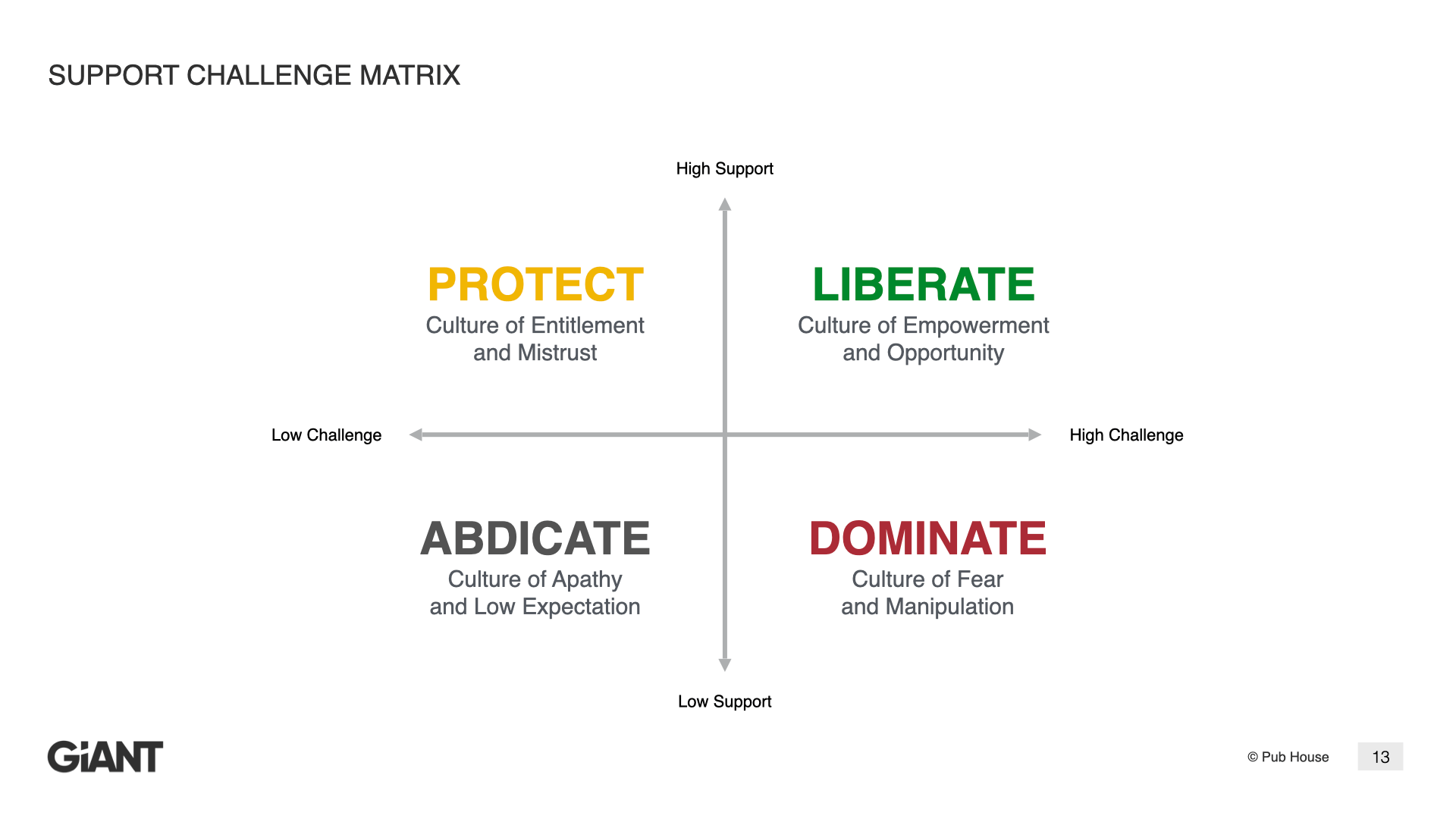
The Support Challenge Matrix helps leaders balance support and challenge to foster growth and accountability within teams. It defines four leadership styles: Liberate, Protect, Dominate, and Abdicate, emphasizing that effective leadership requires emotional intelligence and adaptability.
-
True leadership is about service, not control. Servant-leadership fosters trust, emphasizes humility, and focuses on growth for all. It encourages leading with others in mind, building loyalty and lasting impact while promoting self-awareness in leadership behaviors.