Latest Posts
-
Effective leadership requires building trust through meaningful connections, not routine check-ins. Asking insightful questions fosters psychological safety, encourages openness, and demonstrates genuine care for team members, ultimately enhancing relationships and improving overall performance. Prioritize intentional curiosity in communications.

-
John Maxwell emphasizes that true leadership relies on influence rather than title. Effective leaders develop moral authority through authentic connections and personal growth. His five levels of leadership highlight the importance of trust, character, and empowering others throughout the leadership…

-
Teams often underperform not due to a lack of talent but because voices go unheard. Effective leaders listen intentionally, leveraging the unique strengths of each team member. The 5 Voices framework fosters self-awareness and team awareness, promoting better communication and…
-
GiANT Worldwide’s Altitude Training is a 51-session online leadership course aimed at enhancing self-awareness, communication, and team dynamics. It offers practical tools for effective leadership, including certification opportunities, and is suitable for leaders at any experience level.

-
Effective leadership relies on emotional intelligence (EQ) rather than just having answers. Leaders should prioritize empathy, self-regulation, and honest communication, fostering trust and connection. Reflect on your responses to tension and consider how to integrate more EQ into your leadership…
-
The 5 H’s Exercise fosters team connection through storytelling about Hero, Hardship, Highlight, Hilarious, and Hope. This relational tool builds trust and understanding, essential for high-performing teams, by encouraging authenticity and shared experiences among team members.

-
Effective leadership fosters positivity and resilience, enabling teams to thrive. By prioritizing trust and creativity over cynicism, leaders can create a culture that encourages contribution and growth. Consider how you can model hope and confidence in your leadership approach this…
-
Effective leadership faces challenges that depend on daily success. Staying present is crucial; distractions can hinder achievement. Identifying underlying systems is essential to improve outcomes. Intentional system design leads to better performance for leaders and teams, promoting meaningful impacts.

-
Memorial Day serves as a reminder that true leadership is about legacy over ego, emphasizing service, sacrifice, and humility. It challenges individuals to reflect on their leadership purpose and the impact they have on future generations.
-
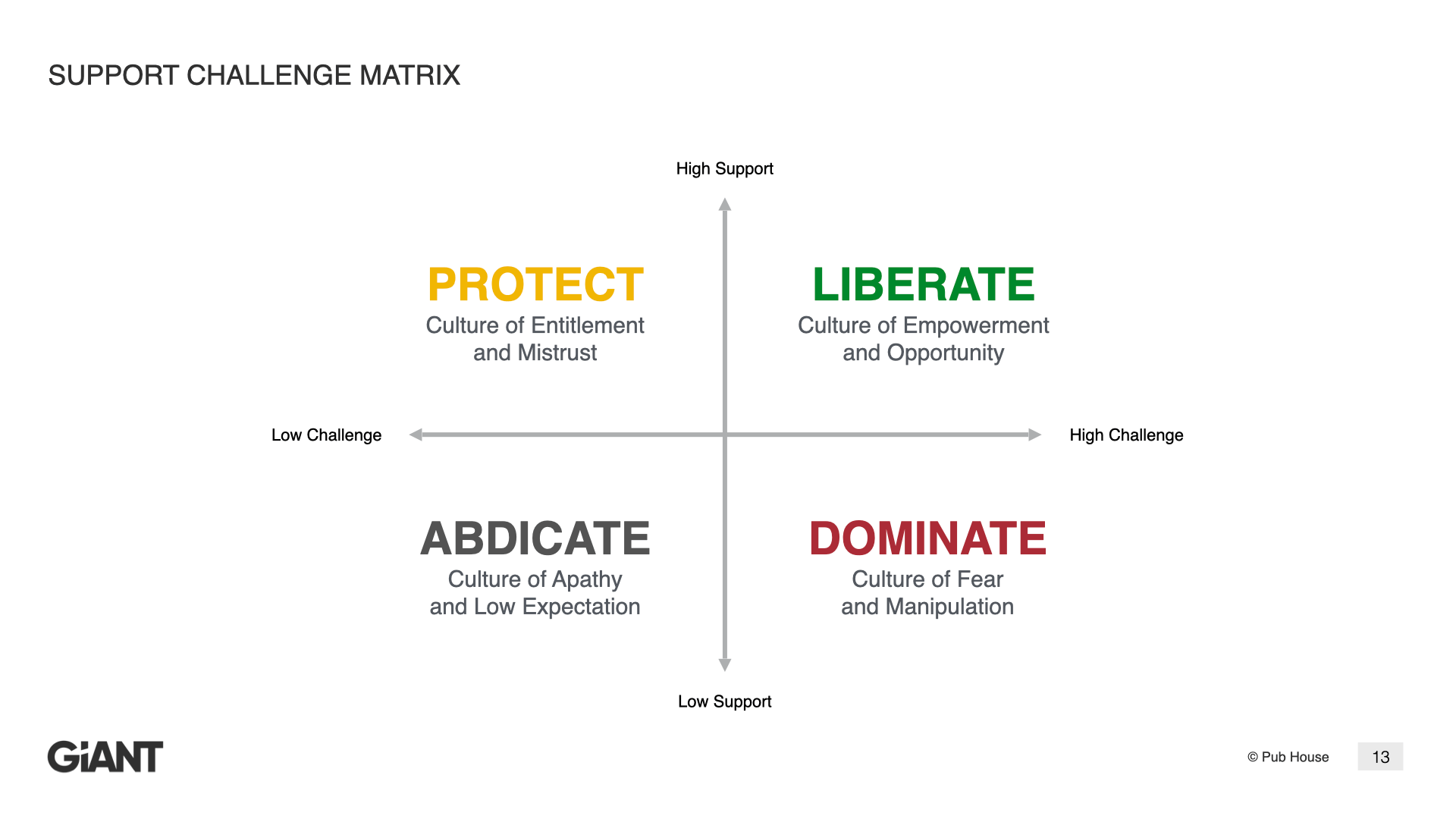
The Support Challenge Matrix helps leaders balance support and challenge to foster growth and accountability within teams. It defines four leadership styles: Liberate, Protect, Dominate, and Abdicate, emphasizing that effective leadership requires emotional intelligence and adaptability.